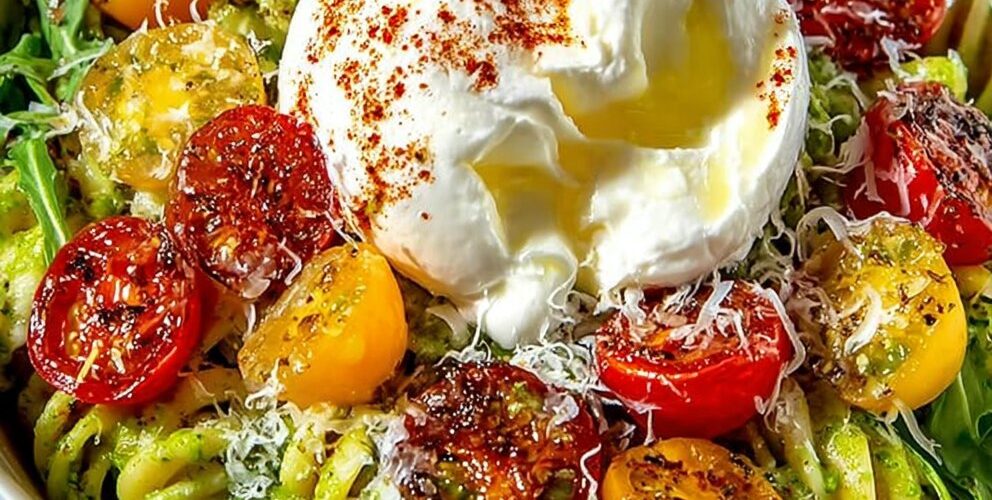
Ces pâtes au pesto d’avocat allient la richesse du pesto traditionnel au basilic et l’onctuosité de l’avocat pour une sauce incroyablement onctueuse et nutritive. Garnie de burrata fraîche et de tomates cerises colorées, ce plat transforme des ingrédients simples en un repas élégant, parfait pour les dîners de semaine ou pour recevoir des invités.
Ingrédients
Pour les pâtes :
- 450 g (1 livre) de pâtes de votre choix (les Colonne Pompéi, les penne ou les fusilli fonctionnent bien)
- 1 cuillère à soupe de sel casher pour l’eau des pâtes
Pour le pesto d’avocat :
- 1½ avocat mûr, dénoyauté et pelé
- 30 g (1 tasse) de feuilles d’épinards crues
- 25 g (1 tasse) de feuilles de basilic frais
- 1 citron, pressé (environ 3 cuillères à soupe)
- 60 ml (¼ tasse) d’huile d’olive extra vierge
- 40 g (⅓ tasse) de pignons de pin
- 5 gousses d’ail, pelées
- 1 cuillère à soupe de miel chaud, plus un peu pour servir
- Poivre noir fraîchement moulu, au goût
- Flocons de piment rouge concassés, au goût
- 50 g (½ tasse) de parmesan fraîchement râpé, plus un peu pour servir
Pour servir :
- 150 g (1 tasse) de tomates cerises, coupées en deux
- 225 g (8 oz) de fromage burrata frais
- Parmesan supplémentaire, râpé
- Miel extra chaud (facultatif)
- Flocons de piment rouge supplémentaires (facultatif)
Instructions étape par étape
Préparation des pâtes
Étape 1 : Remplissez une grande casserole d’eau et portez-la à ébullition à feu vif. Ajoutez au moins 1 cuillère à soupe de sel casher. L’eau doit avoir un goût d’eau de mer pour bien assaisonner les pâtes.
Étape 2 : Ajoutez les pâtes à l’eau bouillante et faites-les cuire selon les instructions sur l’emballage jusqu’à ce qu’elles soient al dente. Cela prend généralement 8 à 12 minutes selon la forme des pâtes. Remuez de temps en temps pour éviter qu’elles ne collent.
Étape 3 : Avant d’égoutter, réservez 500 ml (2 tasses) d’eau de cuisson des pâtes féculentes. Cet or liquide contribuera à obtenir une sauce parfaitement homogène. Égouttez les pâtes dans une passoire et réservez.
Création du pesto d’avocat
Étape 4 : Pendant la cuisson des pâtes, préparez votre pesto d’avocat. Coupez les avocats en deux, retirez les noyaux et récupérez la chair dans un mixeur ou un robot culinaire.
Étape 5 : Ajoutez les épinards, le basilic frais, le jus de citron, l’huile d’olive extra vierge, les pignons de pin, les gousses d’ail, le miel chaud, le poivre noir, les flocons de piment rouge et le parmesan râpé dans le mixeur avec les avocats.
Étape 6 : Versez 250 ml (1 tasse) de l’eau de cuisson réservée et mixez à vitesse maximale pendant 60 à 90 secondes jusqu’à obtenir une pâte lisse et crémeuse. La sauce doit avoir une couleur verte éclatante et une texture veloutée.
Étape 7 : Goûtez et rectifiez l’assaisonnement si nécessaire. Ajoutez du jus de citron pour la brillance, du miel pour la douceur ou des flocons de piment rouge pour le piquant. Si la consistance vous semble trop épaisse, ajoutez progressivement de l’eau de cuisson des pâtes jusqu’à obtenir une sauce qui nappe le dos d’une cuillère.
Combiner et servir
Step 8: Heat a large skillet or sauté pan over medium heat. Add the cooked pasta to the pan, then immediately pour the avocado pesto over the pasta.
Step 9: Using tongs or a large spoon, gently toss the pasta with the pesto sauce for 1-2 minutes until every strand is well coated and the mixture is heated through. The residual heat will warm the sauce without cooking it too much.
Step 10: If the sauce appears too thick, add small amounts of the remaining pasta water until you reach the desired consistency. The sauce should cling to the pasta without being gluey.
Plating and Garnishing
Step 11: Divide the pasta among serving bowls, creating a small well in the center of each portion for the burrata.
Step 12: Arrange the halved cherry tomatoes around each pasta serving, adding pops of color and fresh acidity to balance the rich sauce.
Step 13: Tear the burrata cheese into generous portions and place one piece in the center of each bowl. The creamy cheese will slowly melt into the warm pasta, creating an even more luxurious texture.
Step 14: Finish each serving with freshly grated Parmesan cheese, a drizzle of hot honey if desired, and a pinch of red pepper flakes for those who enjoy extra heat.
Nutritional Information and Timing
Preparation Time: 15 minutes Cooking Time: 12 minutes Total Time: 27 minutes Servings: 4-6 portions
Nutritional Information (per serving, serves 4):
- Calories: 485
- Fat: 28g
- Saturated Fat: 8g
- Carbohydrates: 48g
- Sugar: 8g
- Protein: 18g
- Fiber: 7g
- Sodium: 520mg
Recipe Variations and Substitutions
Protein Additions
Transform this pasta into a more substantial meal by adding grilled chicken breast, pan-seared shrimp, or Italian sausage. For vegetarian options, consider adding roasted chickpeas, grilled zucchini, or sautéed mushrooms. These proteins should be cooked separately and added just before serving.
Nut-Free Alternatives
Replace pine nuts with toasted sunflower seeds or pumpkin seeds for those with tree nut allergies. Hemp hearts also work well and add extra nutrition. For a nut-free version that maintains richness, increase the avocado to 2 full avocados and add an extra tablespoon of olive oil.
Dairy-Free Options
Substitute the Parmesan cheese with nutritional yeast for a vegan-friendly version that still provides umami depth. Use 3 tablespoons of nutritional yeast in place of the Parmesan. Replace the burrata with vegan mozzarella or simply omit it for a lighter dish.
Herb Variations
While basil is traditional, experiment with other fresh herbs. Fresh mint creates a refreshing twist, while cilantro adds a Mexican-inspired flavor profile. Parsley provides a milder taste, and combining multiple herbs creates complex flavor layers.
Pasta Shape Alternatives
This sauce works beautifully with various pasta shapes. Short pasta like fusilli, penne, or rotini hold the sauce well in their curves and hollows. Long pasta such as linguine or fettuccine creates an elegant presentation, while whole wheat or legume-based pastas add extra nutrition.
Storage and Make-Ahead Tips
The avocado pesto can be prepared up to 24 hours in advance if stored properly. Press plastic wrap directly onto the surface of the sauce to prevent oxidation, then refrigerate. The lemon juice helps maintain the vibrant green color, but some darkening is natural.
For longer storage, freeze the pesto in ice cube trays, then transfer to freezer bags for up to 3 months. Thaw individual portions as needed. However, avoid freezing the complete dish with burrata, as the cheese doesn’t freeze well.
Leftover pasta keeps in the refrigerator for 2-3 days. Reheat gently with a splash of water or olive oil to restore the creamy consistency. Add fresh tomatoes and cheese just before serving for the best texture and flavor.
Frequently Asked Questions
How do I prevent the avocado pesto from turning brown? The lemon juice in this recipe acts as a natural preservative to slow browning. To further prevent oxidation, press plastic wrap directly onto the surface of the pesto, eliminating air contact. Adding the pesto to hot pasta immediately also helps maintain color, as the brief heat sets the vibrant green hue.
Can I make this dish without a blender or food processor? While a blender creates the smoothest consistency, you can make a chunkier version by mashing the avocados with a fork and finely mincing the garlic, basil, and spinach. Whisk everything together with the liquid ingredients. The texture will be different but still delicious.
What’s the best way to choose ripe avocados for this recipe? Look for avocados that yield slightly to gentle pressure but aren’t mushy. The skin should be dark green to almost black, depending on the variety. If your avocados are too firm, place them in a paper bag with a banana overnight to speed ripening.
Can I substitute the hot honey with regular honey? Regular honey works perfectly fine and provides the same sweetness balance. The “hot” honey adds a subtle spicy note, but you can achieve similar results by adding a pinch more red pepper flakes to regular honey. Maple syrup also makes an excellent substitute for vegans.
How do I properly handle and serve burrata cheese? Burrata is best served at room temperature for optimal creaminess. Remove it from the refrigerator 30 minutes before serving. Use a sharp knife to cut it, or simply tear it by hand for a rustic presentation. The creamy interior should flow slightly when the outer shell is broken, mixing beautifully with the warm pasta.