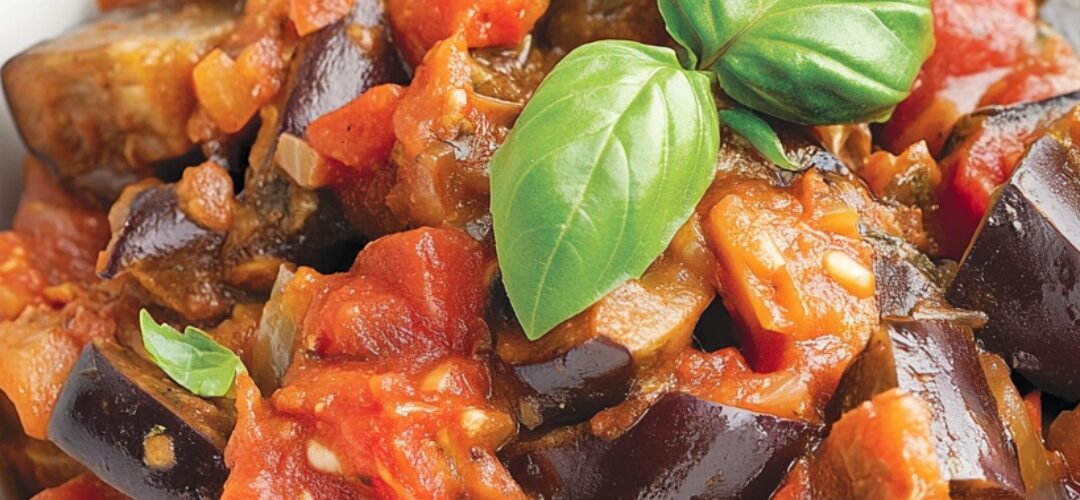
Découvrez les saveurs vibrantes de la cuisine méditerranéenne avec ce superbe plat d’aubergines sautées qui transforme de simples légumes du jardin en un chef-d’œuvre culinaire. Cette recette met en valeur la douceur naturelle des tomates cerises, la richesse terreuse de l’aubergine et la fraîcheur aromatique du basilic, créant un plat polyvalent qui se déguste à merveille en accompagnement, en plat principal ou en entrée.
Ingrédients
Pour l’aubergine sautée :
- 2 cuillères à soupe (30 ml) d’huile d’olive extra vierge
- 450 g (1 lb) de tomates cerises, coupées en deux
- 3 grosses gousses d’ail hachées
- 1/4 cuillère à café de flocons de piment rouge
- 1 grosse aubergine (environ 1,5 lb/680 g), coupée en cubes de 1 pouce
- 1 tasse (240 ml) d’eau
- 1/2 cuillère à café de sel casher
- 1/4 cuillère à café de poivre noir fraîchement moulu
- 1/3 tasse de feuilles de basilic frais, hachées grossièrement
- Basilic frais supplémentaire pour la garniture
Instructions étape par étape
Temps de préparation : 15 minutes
Temps de cuisson : 20 minutes
Durée totale : 35 minutes
Étape 1 : Préparation de la base. Faites chauffer l’huile d’olive dans une grande poêle à fond épais ou une sauteuse à feu moyen. La poêle doit être suffisamment grande pour contenir tous les ingrédients sans les surcharger, ce qui garantit une cuisson optimale et un développement optimal des saveurs.
Étape 2 : Faire revenir les aromates. Ajoutez les tomates cerises coupées en deux, l’ail émincé et les flocons de piment rouge à l’huile chaude. Faites revenir 5 minutes en remuant de temps en temps, jusqu’à ce que les tomates commencent à ramollir et à libérer leur jus, et que l’ail devienne parfumé et doré. Les tomates devraient commencer à se décomposer légèrement, créant une base de sauce naturelle.
Étape 3 : Ajouter l’aubergine. Incorporez les dés d’aubergine dans la poêle en remuant délicatement pour les mélanger au mélange de tomates. L’aubergine absorbera d’abord une partie de l’huile et du jus, ce qui est normal et contribue à la saveur finale.
Étape 4 : Cuisson des légumes à la vapeur. Versez l’eau sur le mélange d’aubergines et de tomates, puis assaisonnez de sel et de poivre noir. Portez le mélange à frémissement doux, puis réduisez le feu à moyen-doux, couvrez la casserole et laissez cuire 15 minutes. Remuez de temps en temps pour éviter que les légumes n’attachent et assurer une cuisson uniforme.
Étape 5 : Finition et service. Retirez le couvercle et vérifiez que l’aubergine est tendre et que le liquide s’est presque entièrement évaporé, laissant une sauce légère et savoureuse. Incorporez le basilic frais haché pendant la dernière minute de cuisson. Goûtez et rectifiez l’assaisonnement si nécessaire. Garnissez de feuilles de basilic frais supplémentaires avant de servir.
Informations nutritionnelles (par portion – pour 4 à 6 personnes)
- Calories : 85-95 par portion
- Protéines : 3-4 g
- Glucides : 12-15 g
- Matières grasses : 5-7 g
- Fibres : 6-8 g
- Sodium : 195-230 mg
- Potassium: 450-520mg
- Vitamin C: 15-20mg
- Lycopene: 8-12mg (from tomatoes)
- Folate: 25-35mcg
Nutritional values may vary based on exact ingredient quantities and eggplant size
Recipe Variations and Substitutions
Protein Additions
Transform this vegetarian dish into a complete meal by adding white beans, chickpeas, or lentils during the last 5 minutes of cooking. For non-vegetarian options, cooked Italian sausage, pancetta, or grilled chicken can be stirred in at the end.
Cheese Enhancements
Elevate the dish with cheese additions such as crumbled feta, fresh mozzarella pearls, or grated Parmesan. Add cheese during the last 2 minutes of cooking or sprinkle over the finished dish for optimal melting and flavor integration.
Herb Variations
While basil is traditional and highly recommended, you can experiment with other fresh herbs such as oregano, thyme, or a combination of Mediterranean herbs. Fresh mint adds an unexpected but delightful twist to this dish.
Vegetable Additions
Enhance the nutritional profile and flavor complexity by adding bell peppers, zucchini, or yellow squash. These vegetables should be added at the same time as the eggplant to ensure proper cooking.
Spice Modifications
Adjust the heat level by increasing or decreasing the red pepper flakes. For a smoky flavor, substitute smoked paprika for some of the red pepper flakes. Ground fennel seeds add an aromatic licorice note that pairs beautifully with tomatoes.
Expert Tips for Perfect Results
Choose eggplant that feels firm and heavy with smooth, glossy skin. Avoid eggplants with soft spots, wrinkled skin, or brown patches. The stem should be bright green, indicating freshness.
When cutting eggplant, aim for uniform 1-inch cubes to ensure even cooking. Smaller pieces may become mushy, while larger pieces may not cook through properly in the allotted time.
Select cherry tomatoes that are ripe but still firm. They should give slightly to pressure but not be overly soft. A mix of red and yellow cherry tomatoes creates a beautiful color contrast.
The key to developing rich flavor is allowing the tomatoes to break down naturally during the initial sautéing phase. This creates a concentrated base that infuses the entire dish with sweet, tangy notes.
Don’t skip the covered cooking phase, as this steam-cooking method ensures the eggplant becomes perfectly tender while absorbing all the surrounding flavors.
Storage and Meal Prep
This sautéed eggplant dish actually improves in flavor when stored overnight, making it excellent for meal prep. Store covered in the refrigerator for up to 5 days. The flavors meld and intensify, creating an even more delicious dish the next day.
For freezing, this dish can be stored for up to 3 months, though the texture of the eggplant will be softer upon thawing. Freeze in portion-sized containers for easy reheating.
When reheating, add a splash of water or olive oil to refresh the dish and prevent sticking. Reheat gently over medium-low heat, stirring occasionally.
Serving Suggestions
This versatile dish shines in numerous serving applications. Serve it over pasta, polenta, or rice for a complete vegetarian meal. It makes an excellent topping for crusty bread or crostini as an appetizer.
For Mediterranean-style dining, serve alongside grilled fish, chicken, or lamb. It also works beautifully as part of a mezze platter with hummus, olives, and pita bread.
Consider using this as a pizza topping, a filling for omelets or frittatas, or as a component in grain bowls with quinoa or farro.
Health Benefits
This dish exemplifies the health benefits of Mediterranean cuisine. Eggplant is rich in antioxidants, particularly nasunin, which may help protect against cellular damage. The fiber content supports digestive health and helps maintain stable blood sugar levels.
Cherry tomatoes provide lycopene, a powerful antioxidant that may support heart health and provide protection against certain cancers. The olive oil contributes heart-healthy monounsaturated fats and helps with the absorption of fat-soluble vitamins.
Fresh basil contains compounds with anti-inflammatory properties and adds vitamin K, which is important for bone health.
Frequently Asked Questions
Can I make this dish without water? While the water helps steam the eggplant to perfect tenderness, you can substitute with vegetable or chicken broth for added flavor. Avoid omitting liquid entirely, as the eggplant may not cook evenly and could burn.
Why does my eggplant seem to absorb all the oil? Eggplant naturally absorbs oil due to its spongy texture. This is normal and contributes to the dish’s flavor. If you prefer less oil absorption, you can salt the cubed eggplant for 30 minutes before cooking, then rinse and pat dry.
Can I use canned tomatoes instead of fresh cherry tomatoes? Fresh cherry tomatoes are strongly recommended for optimal flavor and texture. However, if unavailable, you can substitute with 1 can (14 oz) of diced tomatoes, drained. The cooking time may need to be reduced slightly.
How can I tell when the eggplant is properly cooked? Properly cooked eggplant should be tender when pierced with a fork and have a creamy texture. It should not be mushy or have any hard, raw centers. The skin should be soft and easily chewable.
Is this dish suitable for special diets? This recipe is naturally vegan, vegetarian, gluten-free, and dairy-free. It’s also low in calories and fits well into Mediterranean, plant-based, and anti-inflammatory eating patterns.
Ce délice d’aubergines sautées aux tomates cerises et au basilic incarne l’essence même de la cuisine méditerranéenne, où des ingrédients simples et de qualité sont transformés en un mets extraordinaire grâce à une technique et un timing précis. L’association de tomates sucrées, d’aubergines crémeuses et de basilic aromatique crée un plat qui ravit le palais et l’âme, prouvant que la cuisine végétarienne peut être aussi satisfaisante et savoureuse qu’un plat à base de viande. Qu’elle soit servie pour un simple dîner de semaine ou pour recevoir, cette recette offre des résultats constants et délicieux qui célèbrent la beauté naturelle des légumes frais.