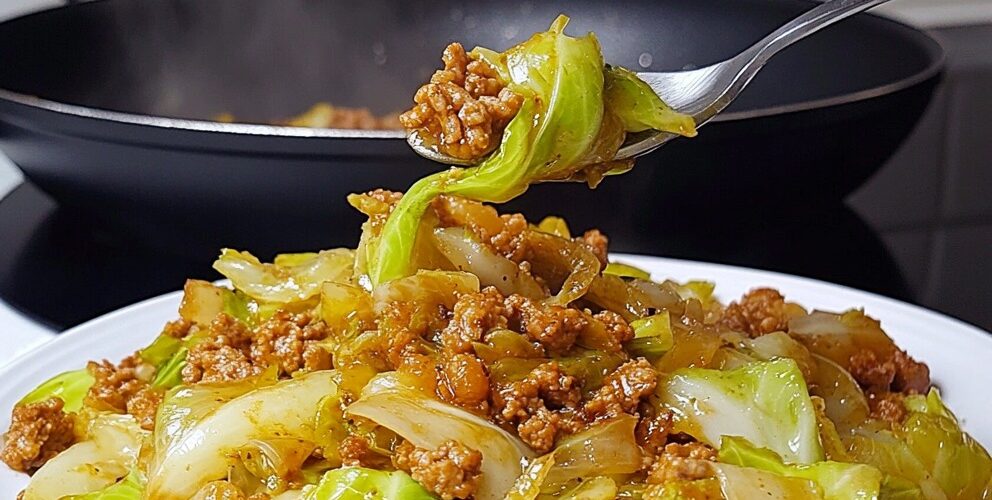
Découvrez pourquoi cette recette révolutionnaire de chou vert à la viande hachée fait fureur en cuisine. Ce plat rapide et savoureux associe du chou vert tendre à de la viande hachée parfaitement assaisonnée, créant ainsi ce que beaucoup appellent des « rouleaux de chou paresseux », sans avoir à rouler. Le secret réside dans le blanchiment du chou avant de l’incorporer au mélange aromatique de viande hachée.
Pourquoi cette recette de jeune chou est supérieure
Le chou jeune, souvent appelé « reine des légumes », se transforme en un mets extraordinaire grâce à cette méthode. Contrairement aux recettes traditionnelles de chou mijoté, cette technique préserve son croquant naturel tout en lui insufflant les saveurs riches et savoureuses de la viande hachée assaisonnée. Le blanchiment permet au chou de conserver sa couleur éclatante et sa texture parfaite.
Ingrédients
Pour la base de viande hachée :
- 700 g (1,5 lb) de cou de porc haché (ou de poulet/bœuf haché)
- 1 gros oignon, coupé en dés
- 2 carottes moyennes, râpées
- 1 tomate moyenne, coupée en dés (ou 2 cuillères à soupe de concentré de tomates)
- 2-3 gousses d’ail frais, hachées
- 2 cuillères à soupe d’huile végétale
- Sel au goût
- Poivre noir au goût
- 1 cuillère à café de paprika doux
- 1 cuillère à café de mélange d’épices hmeli-suneli
Pour le chou :
- 700 g (1,5 lb) de jeunes choux, coupés en pétales
- 1 litre (4 tasses) d’eau
- 1 cuillère à soupe de sel pour l’eau de blanchiment
Instructions étape par étape
Préparation du mélange de viande hachée
Étape 1 : Faire sauter les légumes. Faites chauffer l’huile végétale dans une poêle profonde ou une casserole à fond épais à feu moyen-vif. Ajoutez l’oignon coupé en dés et les carottes râpées, et faites cuire pendant 5 à 7 minutes jusqu’à ce que l’oignon devienne translucide et que les carottes soient légèrement tendres.
Étape 2 : Faire dorer la viande hachée. Ajoutez la viande hachée dans la poêle avec les légumes sautés. Faites cuire à couvert, en remuant fréquemment pour défaire les grumeaux. Faites revenir environ 10 minutes, jusqu’à ce que la viande change de couleur et libère son jus naturel.
Étape 3 : Assaisonner la viande. Une fois que la viande a changé de couleur et commence à dorer, assaisonnez généreusement de sel et de poivre noir selon votre goût. Poursuivez la cuisson jusqu’à ce que les bords soient dorés.
Étape 4 : Ajoutez les épices et les aromates. Lorsque la viande commence à dorer, ajoutez le paprika doux et le mélange d’épices hmeli-suneli. Le hmeli-suneli, composé de 14 herbes aromatiques différentes, libérera instantanément des arômes incroyables. Remuez bien pour répartir les épices uniformément.
Étape 5 : Incorporer la tomate. Ajoutez les tomates fraîches coupées en dés au mélange. Si vous utilisez du concentré de tomates, ajoutez-le maintenant. Les légumes frais offrent toujours une saveur supérieure, utilisez donc des tomates fraîches si possible. Mélangez bien pour bien mélanger.
Step 6: Simmer the Mixture Reduce heat to medium-low, cover the pan, and simmer for 8-10 minutes. This allows the tomato to release its juices and the meat to absorb all the aromatic flavors. The tomato should completely melt and integrate into the mixture.
Preparing the Young Cabbage
Step 7: Prepare Blanching Water While the meat mixture simmers, bring 1 liter of water to a rolling boil in a separate large saucepan. Add 1 tablespoon of salt to the boiling water.
Step 8: Cut the Cabbage Cut the young cabbage into petal-shaped pieces, removing the core but keeping the pieces reasonably large. The cabbage will shrink significantly during blanching.
Step 9: Blanch the Cabbage Add all the cabbage petals to the boiling salted water at once. Cover the pot and blanch for only 2-3 minutes after the water returns to a boil. Young cabbage is very tender and cooks quickly. Turn the cabbage once during blanching to ensure even cooking.
Step 10: Drain the Cabbage Immediately drain the blanched cabbage in a colander. The cabbage should be tender but still have a slight bite. Do not overcook, as it will continue cooking when combined with the meat.
Combining and Final Cooking
Step 11: Marry the Ingredients Add the drained blanched cabbage to the simmered meat mixture. Stir carefully to combine, ensuring the cabbage is evenly distributed throughout the meat.
Step 12: Final Seasoning Add the minced fresh garlic to the combined mixture. Garlic pairs beautifully with cabbage and adds an essential aromatic element to the dish.
Step 13: Final Simmer Cover the pan and simmer on low heat for 3-5 minutes, allowing all the flavors to marry together. Turn off the heat and let the dish rest for another 5 minutes before serving.
Nutritional Information and Timing
Preparation Time: 15 minutes Cooking Time: 25 minutes Total Time: 40 minutes Serves: 4-6 people Calories per serving: Approximately 320 calories
Nutritional Benefits: This dish provides high-quality protein from the minced meat, essential vitamins C and K from the young cabbage, beta-carotene from the carrots, and beneficial compounds from the onions and garlic. The combination creates a well-balanced, nutrient-dense meal that’s both satisfying and healthy.
Recipe Variations and Substitutions
Meat Alternatives: Substitute pork with ground chicken, turkey, or beef based on your preference. Each type of meat will bring its own unique flavor profile to the dish.
Vegetarian Version: Replace the minced meat with a mixture of cooked lentils and chopped mushrooms for a plant-based alternative that maintains the hearty texture.
Spice Variations: If hmeli-suneli is unavailable, substitute with a mixture of dried herbs including coriander, fenugreek, bay leaves, and dried mint.
Cabbage Alternatives: While young cabbage works best, you can use regular cabbage cut into smaller pieces, though it may require slightly longer blanching time.
Low-Carb Option: Serve over cauliflower rice or zucchini noodles instead of traditional rice or pasta for a lower-carb alternative.
Why Blanching Makes the Difference
The key to this recipe’s success lies in blanching the cabbage separately before combining it with the meat. This technique preserves the cabbage’s natural texture and prevents it from becoming mushy. When cabbage is cooked directly with the meat from the beginning, it tends to release too much water and loses its appealing bite. Blanching maintains the vegetable’s integrity while allowing it to absorb the meat’s flavors perfectly.
Serving Suggestions
This versatile dish works wonderfully as a complete meal on its own or can be served alongside rice, mashed potatoes, or crusty bread. The flavors are reminiscent of traditional cabbage rolls but without the time-consuming preparation. It’s equally delicious served hot immediately after cooking or at room temperature the next day.
Storage and Reheating
Store leftovers in the refrigerator for up to 4 days. The flavors actually improve overnight as they continue to meld together. Reheat gently on the stovetop over medium-low heat, adding a splash of water if needed to prevent sticking. This dish also freezes well for up to 3 months.
Frequently Asked Questions
Why can’t I just add the cabbage directly to the minced meat instead of blanching it separately? Blanching the cabbage separately is crucial for achieving the perfect texture and flavor. When cabbage is cooked directly with the meat, it releases too much water and becomes soggy. Blanching preserves the cabbage’s structure while allowing it to absorb the meat’s flavors without compromising texture.
Can I use regular cabbage instead of young cabbage? Yes, but you’ll need to adjust the cooking time. Regular cabbage is tougher and may require 4-5 minutes of blanching instead of 2-3 minutes. Cut it into smaller pieces to ensure even cooking.
What is hmeli-suneli and can I substitute it? Hmeli-suneli is a Georgian spice blend containing 14 different herbs and spices. If unavailable, create a substitute using equal parts dried coriander, fenugreek, dried mint, and bay leaves, with a pinch of cinnamon and cloves.
How do I know when the cabbage is properly blanched? The cabbage should be bright green, tender when pierced with a fork, but still have a slight crunch. It should have reduced in volume by about half and be easy to cut with a fork.
Puis-je préparer ce plat à l’avance ? Absolument ! Ce plat est même meilleur le lendemain, car les saveurs ont plus de temps pour se développer. Préparez-le complètement, laissez-le refroidir et conservez-le au réfrigérateur. Réchauffez-le doucement avant de servir, en ajoutant un peu d’eau si nécessaire.
Cette approche révolutionnaire de la cuisson du chou jeune avec de la viande hachée crée un plat à la fois réconfortant et raffiné. L’association d’un chou bien blanchi et d’une viande assaisonnée et parfumée donne ce que beaucoup appellent des « rouleaux de chou paresseux » : toute la saveur des rouleaux de chou traditionnels sans le fastidieux processus de roulage. Une fois que vous aurez essayé cette méthode, vous comprendrez pourquoi elle est devenue une recette incontournable pour les dîners de semaine chargés et les réunions de famille.