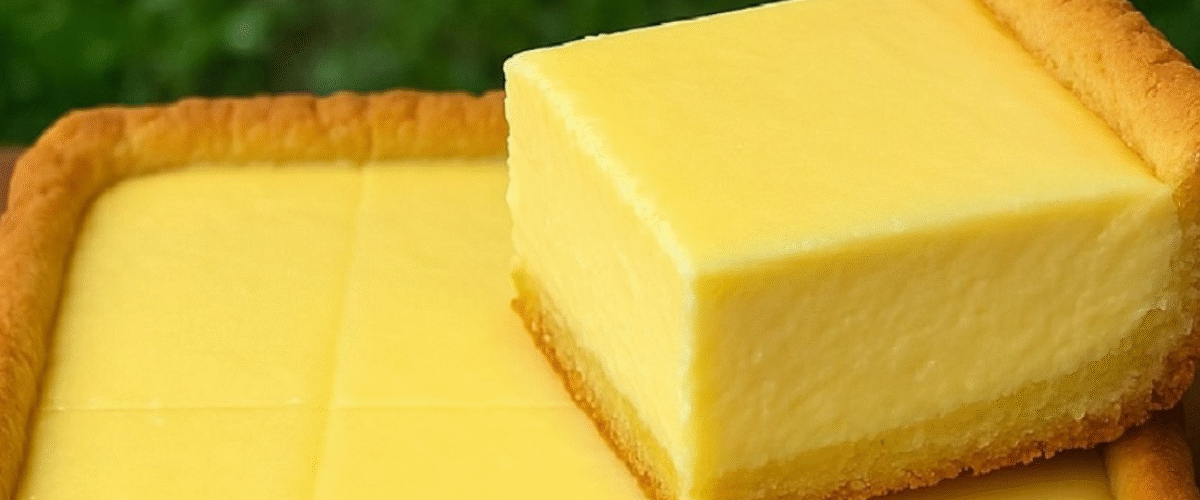
Ce délicieux gâteau italien fourré à la crème allie une pâte fondante et onctueuse à une crème pâtissière onctueuse pour créer un dessert irrésistible qui régale les tables italiennes depuis des générations. Reconnu pour son équilibre délicat de textures et de saveurs, ce gâteau traditionnel conclut parfaitement tout repas ou se déguste avec élégance en après-midi, accompagné d’un café.
Ingrédients
Pour la crème pâtissière :
- 480 ml (2 tasses) de lait entier
- 4 gros jaunes d’œufs
- 100 g (½ tasse) de sucre cristallisé
- 30 g (¼ tasse) de fécule de maïs
- 5 ml (1 cuillère à café) d’extrait de vanille
- Zeste d’un citron frais (facultatif mais recommandé)
Pour la pâte à gâteau :
- 250 g (2 tasses) de farine tout usage
- 100 g (½ tasse) de sucre cristallisé
- 115 g (½ tasse) de beurre froid non salé, coupé en cubes
- 1 gros œuf
- 5 g (1 cuillère à café) de levure chimique
- Une pincée de sel
Pour la garniture :
- 30 g (¼ tasse) de pignons de pin ou d’amandes effilées
- Sucre en poudre pour saupoudrer
Instructions étape par étape
Préparation de la crème pâtissière
Commencez par chauffer le lait entier dans une casserole moyenne à feu moyen jusqu’à ce qu’il soit fumant, mais pas bouillant. De petites bulles se formeront sur les bords une fois le lait prêt. Pendant ce temps, dans un saladier, fouettez les jaunes d’œufs et le sucre cristallisé jusqu’à obtenir une consistance jaune pâle et crémeuse, ce qui prend généralement 2 à 3 minutes en fouettant vigoureusement.
Ajoutez la fécule de maïs au mélange d’œufs et fouettez jusqu’à obtenir une consistance lisse et sans grumeaux. Cette étape est cruciale pour obtenir une crème pâtissière onctueuse. Une fois le lait chaud, tempérez le mélange d’œufs en le versant lentement dans le bol tout en fouettant constamment. Ce processus progressif évite que les œufs ne brouillent.
Remettre le tout dans la casserole et faire chauffer à feu doux. Remuer constamment avec un fouet ou une cuillère en bois pendant environ 5 à 7 minutes, jusqu’à ce que la crème épaississe et prenne la consistance d’un pudding. La crème doit napper le dos d’une cuillère lorsqu’elle est prête. Retirer du feu et incorporer immédiatement l’extrait de vanille et le zeste de citron si vous en utilisez.
Pour éviter la formation d’une peau sur le dessus, pressez une pellicule plastique directement sur la surface de la crème pâtissière et réfrigérez pendant au moins 2 heures ou jusqu’à ce qu’elle soit complètement refroidie.
Préparation de la pâte à tarte
Dans un grand saladier, mélanger la farine, le sucre, la levure chimique et le sel. Ajouter le beurre froid coupé en dés au mélange de farine et travailler du bout des doigts ou à l’aide d’un coupe-pâte jusqu’à obtenir une pâte grossièrement panée, avec quelques morceaux de beurre de la taille d’un petit pois. Cette technique permet d’obtenir la texture feuilletée qui rend la pâte si délicieuse.
Créez un puits au centre du mélange et ajoutez l’œuf battu. À l’aide d’une fourchette ou de vos mains, incorporez progressivement l’œuf au mélange de farine jusqu’à obtenir une pâte souple. La pâte doit être homogène, sans être collante ni trop sèche.
Divide the dough into two portions, making one slightly larger than the other. The larger portion will form the base and sides of the pastry, while the smaller portion will create the top layer. Wrap both portions in plastic wrap and refrigerate for at least 30 minutes. This chilling period allows the gluten to relax and makes the dough easier to roll out.
Assembling the Italian Cream Pastry
Preheat your oven to 175°C (350°F) and prepare a rectangular baking pan by greasing it with butter or lining it with parchment paper. Remove the larger portion of dough from the refrigerator and roll it out on a lightly floured surface to fit your baking pan with some overhang for the sides.
Carefully transfer the rolled dough to your prepared pan, pressing it gently into the corners and up the sides. The pastry should be about 3-4mm thick. Trim any excess dough, leaving about 1cm overhang around the edges.
Remove the chilled pastry cream from the refrigerator and give it a gentle stir to smooth it out. Pour the pastry cream into the prepared pastry shell, spreading it evenly with a spatula. The cream should fill the shell almost to the top of the pastry sides.
Roll out the remaining smaller portion of dough to create the top layer. Carefully place this over the pastry cream, pressing the edges together to seal the pastry completely. Use a fork to crimp the edges decoratively and to ensure a good seal.
Final Touches and Baking
Using a fork, gently prick the top of the pastry in several places to allow steam to escape during baking. This prevents the top from puffing up too much and potentially cracking. Sprinkle the pine nuts or sliced almonds evenly over the surface, pressing them lightly into the dough so they adhere during baking.
Place the assembled pastry in the preheated oven and bake for 35-40 minutes, or until the top is golden brown and the pastry appears slightly puffed. The edges should be well-browned, and the surface should spring back lightly when touched.
Remove from the oven and allow the pastry to cool completely in the pan. This cooling period is essential as it allows the pastry cream to set properly and makes cutting much easier. Once cooled, refrigerate the pastry for at least one hour before serving.
Just before serving, dust the top generously with powdered sugar using a fine-mesh sieve for an elegant presentation.
Nutritional Information and Timing
Preparation Time: 45 minutes (plus 3 hours chilling time) Baking Time: 35-40 minutes Total Time: Approximately 4.5 hours Serves: 8-10 people
Nutritional Information per serving (based on 10 servings):
- Calories: 285
- Protein: 6g
- Carbohydrates: 38g
- Fat: 12g
- Saturated Fat: 7g
- Cholesterol: 95mg
- Sodium: 85mg
- Fiber: 1g
- Sugar: 22g
Recipe Variations and Substitutions
This versatile Italian cream pastry can be adapted in numerous ways to suit different tastes and dietary requirements. For a chocolate variation, add 2 tablespoons of unsweetened cocoa powder to the pastry cream along with the cornstarch, and reduce the cornstarch to 2 tablespoons. This creates a rich chocolate version that’s equally delicious.
For those preferring citrus flavors, increase the lemon zest to two lemons and add a tablespoon of fresh lemon juice to the pastry cream. Orange zest and juice work equally well for an orange-flavored variation.
If you’re looking to reduce calories, you can substitute half of the whole milk with low-fat milk, though this will result in a slightly less rich pastry cream. For a dairy-free version, use full-fat coconut milk or oat milk, keeping in mind that the flavor will be different but still delicious.
The pine nuts can be replaced with sliced almonds, chopped hazelnuts, or even left out entirely for a simpler presentation. Some bakers prefer to brush the top with beaten egg before adding nuts for extra browning and shine.
For a more indulgent version, you can add a thin layer of jam or Nutella between the pastry cream and the top crust, creating additional layers of flavor and texture.
Frequently Asked Questions
Can I make this pastry ahead of time? Yes, this Italian cream pastry actually improves when made a day ahead. The flavors meld together beautifully, and the pastry cream sets perfectly. Store it covered in the refrigerator for up to 3 days. Add the powdered sugar dusting just before serving to maintain its appearance.
Why is my pastry cream lumpy? Lumpy pastry cream typically results from either adding the hot milk too quickly to the eggs or not whisking constantly while cooking. If your cream does become lumpy, strain it through a fine-mesh sieve while it’s still warm, then continue with the recipe. Prevention is key: always temper the eggs slowly and whisk continuously.
Can I freeze this pastry cake? While you can freeze the assembled cake for up to one month, the texture of the pastry cream may change slightly upon thawing. For best results, freeze individual portions wrapped tightly in plastic wrap and aluminum foil. Thaw overnight in the refrigerator before serving.
What’s the best way to get clean cuts when serving? The secret to clean cuts is using a sharp knife dipped in warm water and wiped clean between each cut. Make sure the pastry is well-chilled before cutting, as this helps the cream hold its shape. A gentle sawing motion works better than pressing down hard.
Puis-je utiliser de la pâte brisée du commerce au lieu de la faire moi-même ? Bien que la pâte maison offre un goût et une texture optimaux, vous pouvez la remplacer par de la pâte brisée du commerce. Il vous faudra environ 500 g de pâte au total. Étalez-la et procédez au montage comme indiqué, mais le goût sera moins authentique qu’avec une version maison traditionnelle.
Ce gâteau italien classique fourré à la crème incarne la quintessence de la pâtisserie traditionnelle italienne. Il allie des ingrédients simples à des techniques éprouvées pour créer un dessert véritablement unique. Servi lors d’une réunion de famille ou pour un moment de détente, ce dessert apporte une touche d’élégance italienne à toutes les occasions.